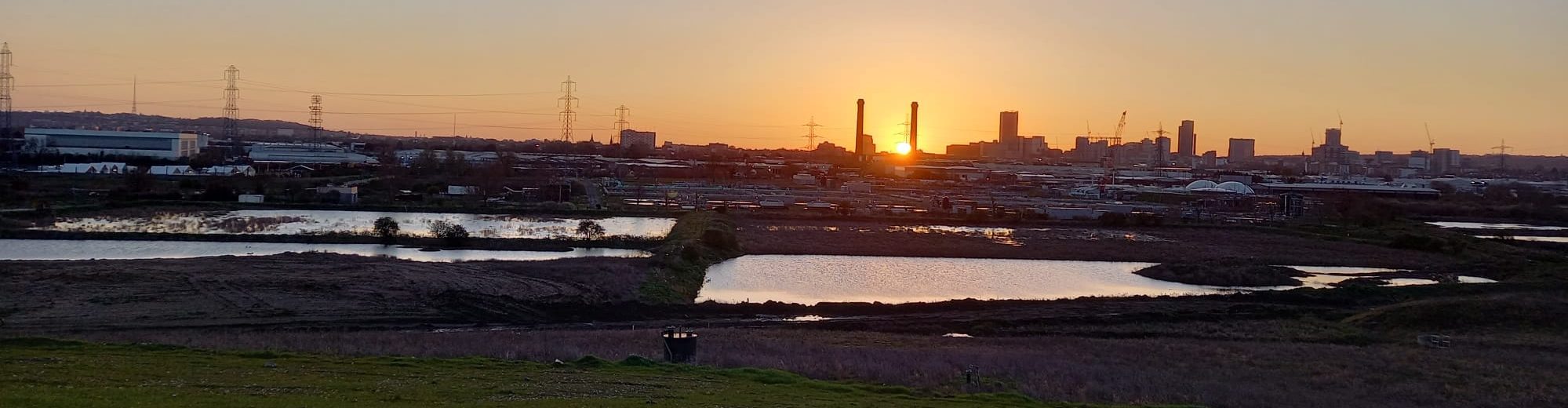
Ornithological recording at the site began over a century ago, providing a unique snapshot of shifts in bird numbers, biodiversity and behaviour – a powerful barometer for assessing the impacts of climate change and habitat alteration, which are increasingly pressing issues. The various land-use changes that have occurred here (from sewage farm to landfill site and now solely incineration) have dramatically changed the site’s ecology.
The Beddington Farm Bird Group (BFBG) was formed in August 1992 by local birdwatchers concerned about the future of this well-known site. We are firmly committed to the establishment of a community nature reserve at Beddington Farmlands, and regularly offer feedback to Valencia Waste Management (VWM) about work on the site. However, we are a fully independent body of volunteers with no links to VWM, and take not part in the process of the creation of this reserve.
The breeding colony of Tree Sparrows at Beddington was one of the largest in the country, and the BFBG adopted this species as its emblem. Unfortunately, the population has recently crashed, and they are now extinct.
As the Farmlands is currently a working site, access to much of the site is limited to the 25 members of the BFBG. Historically, access was permitted via Thames Waste Management (a division of Thames Water Services Ltd), more recently Viridor Waste Management, and since spring 2022, Valencia Waste Management. Around the time of the changeover to VWM, new members were added to the group and granted access.
With this addition of new members, the group plans to increase ornithological recording on the site and monitor the wildlife, while also promoting the site to the local community and visitors from further afield. We are also active in ensuring the site is a place where the public can egage and interact with nature. Our members have led public walks across the site, and our outreach has included appearances in features on Springwatch/Autumnwatch/Winterwatch, natural history documentaries, and a short film for the Guardian. Just recently (November 2025), some members have volunteered their time to help clear some of the vegetation by the public hides, to increase visibility of the lakes for visitors.
 Beddington Farmlands Nature Reserve